
Big Ideas of Measurement
Learn the big ideas of measurement and explore related activities, books, and resources.
Understanding Measurement
Questions about “What’s the biggest?” get raised again and again in early childhood settings. If we want to know just how much bigger the “biggest” one is, we’ll get out a measuring tool: a ruler, a tape measure, or a measuring cup. Alternatively, we might avoid numbers altogether and settle for a direct comparison, lining the containers up tallest to shortest, or from that which holds the most sand to the one that holds the least. In each of these situations, we are engaging in measurement.
Technically speaking, measurement is any process that produces a quantitative description of an attribute, such as length, circumference, weight, temperature, volume, or number. Measurement is an essentially mathematical procedure that we apply in many different contexts.
Copyright: Erikson Institute’s Early Math Collaborative. Reprinted from Big Ideas of Early Mathematics: What Teachers of Young Children Need to Know (2014), Pearson Education.

Quantifying a measurement helps us describe and compare more precisely
Repeated, meaningful experiences with comparison will lead children quite naturally to understand that using their growing sense of numerosity results in measurements that are more exact and ultimately more useful.
All measurement involves a “fair” comparison
When children have many opportunities to make and discuss comparisons, they become more competent with the procedural requirements of measurement. Making direct comparisons in the preschool classroom is critical preparation for later, more sophisticated indirect measurement activities and builds the conviction that to be accurate, measurement must be fair.
Many different attributes can be measured, even when measuring a single object
Children who internalize the fact that a single object can be measured in different ways are more likely to think about, notice, or point out which attribute is being considered whenever a discussion is about size or number.
Explore Books & Resources Related to Measurement
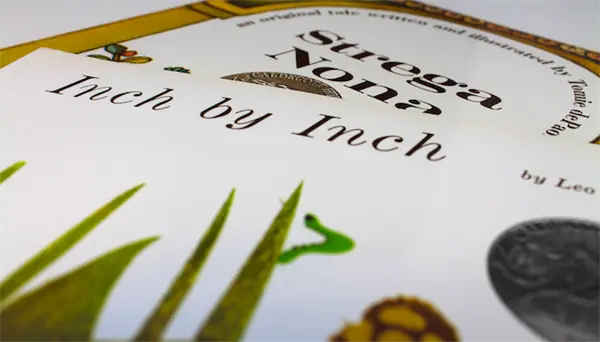
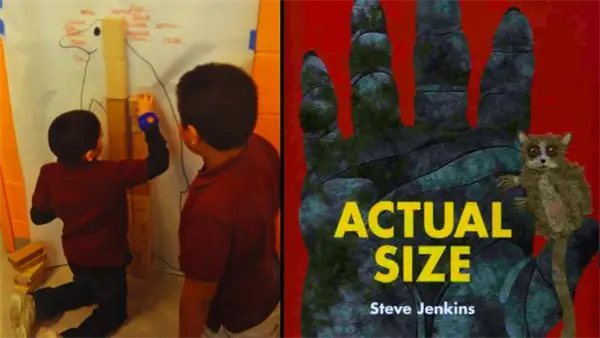
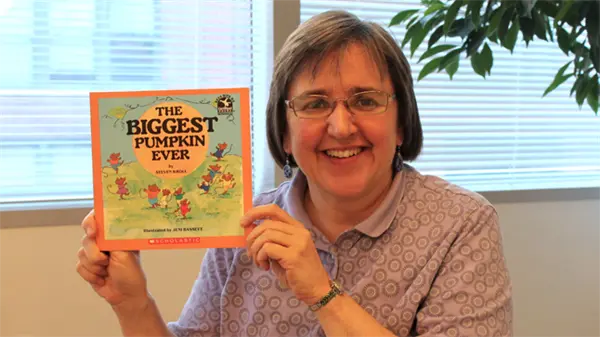
Interestingly, as adults we often don’t recognize that any time we are dealing with measurement, we actually rely on a great deal of mathematical thinking. We are so used to the chain of reasoning involved that we overlook how complex a process it actually is for young children. For example, as natural as it is for us to express measurements in numbers of standard units such as inches or pounds, young children often aren’t ready for the kind of abstract thinking that gives such units meaning. Instead, their conviction that one thing is “bigger” or “biggest” is quite likely to depend on perception – if it looks bigger, it must be bigger. Books and activities related to them are a great way to pick apart such abstract ideas as “bigger” and other measurement concepts related to them.


Big Ideas of Early Mathematics
What Teachers of Young Children Need to Know
The Big Ideas that convey the core concepts of mathematics are at the heart of this book that gives early childhood educators the skills they need to organize for mathematics teaching and learning during the early years.

Join the Collaborative
Together, We Can Change the Way Math Is Taught
Join a hub of educators, administrators, and professionals reframing the way we think about and teach math.