Instructional Coaching
Coaching is a strategic, systematic approach to improving student learning by focusing on core mathematical concepts.
How does instructional coaching work?
Instructional coaching is centered on planning, enacting, reflecting on, and refining math experiences based on the evidence of student learning.
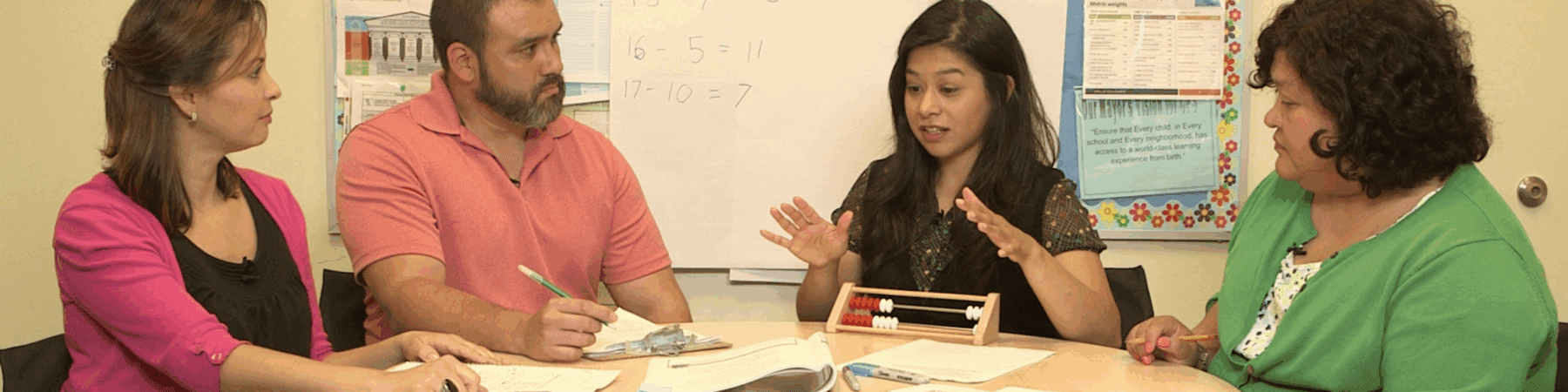
Coaches play a central role in supporting ongoing professional development at the school level by helping teachers become reflective about teaching and learning – both during individual and group coaching sessions as well as during school-based meetings.
Video can also be used to support coaching practices so teachers can observe and reflect on their own teaching. Online supports for teachers include extended access to training videos and teaching resources.
The coaching cycle
The coaching cycle is a 3-step process consisting of a planning conversation, implementation of the planned math experience, and a reflecting conversation.
Teachers and coach:
- Collaboratively look at the data collected during the math experience; and compare it to what they anticipated would happen
- Assess and analyze the data in light of the goals of the math experience and use the evidence of student learning to plan future instruction
- If video of the math experience was captured, observe and analyze key segments of the video-recording to support shifts in teacher practice

1. Planning
Collaboratively planning a math experience that focuses on the big ideas or foundational math concepts and quality teacher interactions. The planning conversation provides the opportunity to deepen teachers’ content knowledge and pedagogical practices.

2. Enactment
The coach supports the teacher’s implementation of the plan through co-teaching, giving live feedback, and collecting observational data.

3. Reflection
Reflecting on the math experience to highlight what worked, discuss student and teacher learning, and determine next steps.

Collaborative practice to sustain professional growth
Collaborative practice provides a common teaching experience for all teachers that is analyzed at coaching sessions and at grade-level meetings. By making the classroom itself a learning site, we activate a powerful mechanism for changing teaching practice.
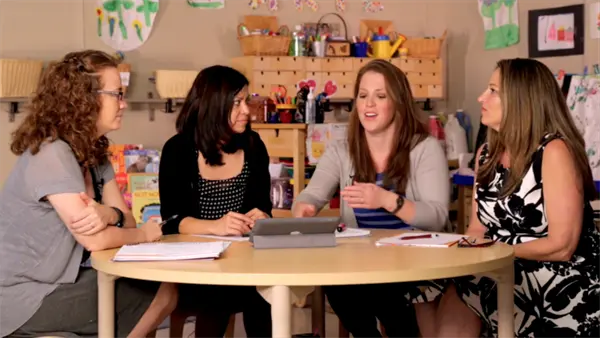
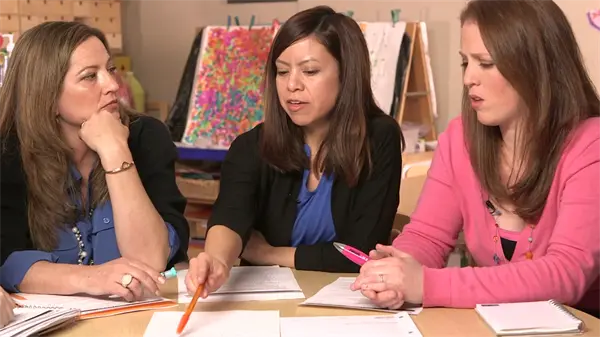
Together, teachers plan an instructional activity that they will enact in each classroom and later debrief the experience of each teacher.
Selecting which task to do is often one of the most challenging aspects but it is powerful as well. Teachers develop a shared ownership of the task, anticipate student responses and consider teacher interactions that will support the development of children’s mathematical thinking.
Debriefing the math experience in each classroom involves highlighting what worked, reflecting on teacher learning, and determining next steps.
Grade-level meetings
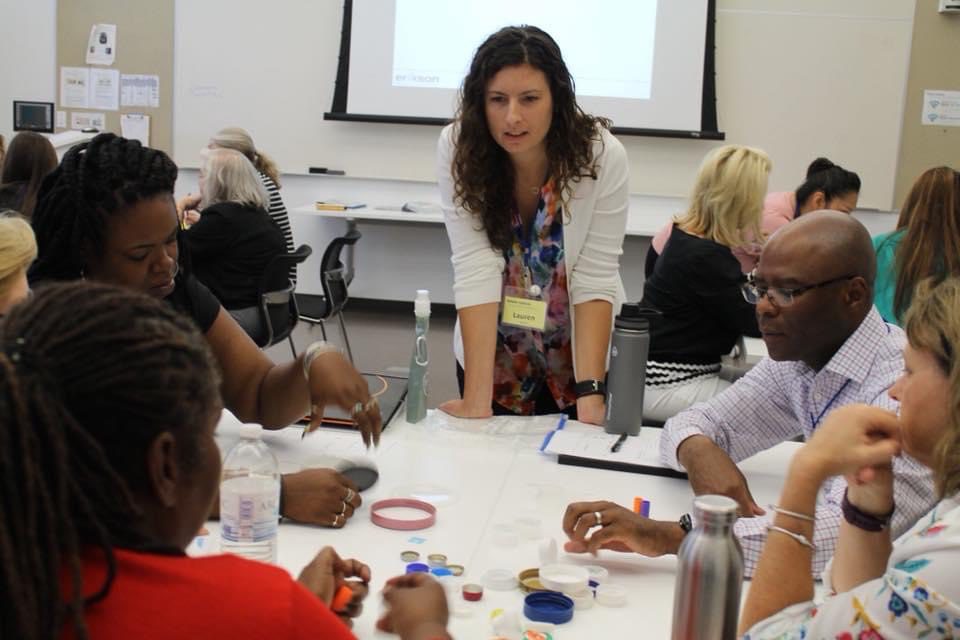
Instructional coaches work within grade levels or grade-level bands to insure that all of the adults are interacting in productive ways that increase knowledge for planning math experiences, anticipating student responses and looking at student work. Math focused grade-level meetings support teacher change by providing an ongoing structured time to engage with the math—first as learners and then as teachers.
A Library of Collaboration
In our Idea Library explore our Focus on Collaboration series, where we examine how teachers can work together to learn and grow their early math teaching.

Join the Collaborative
Together, We Can Change the Way Math Is Taught
Join a hub of educators, administrators, and professionals reframing the way we think about and teach math.