
Learning Labs
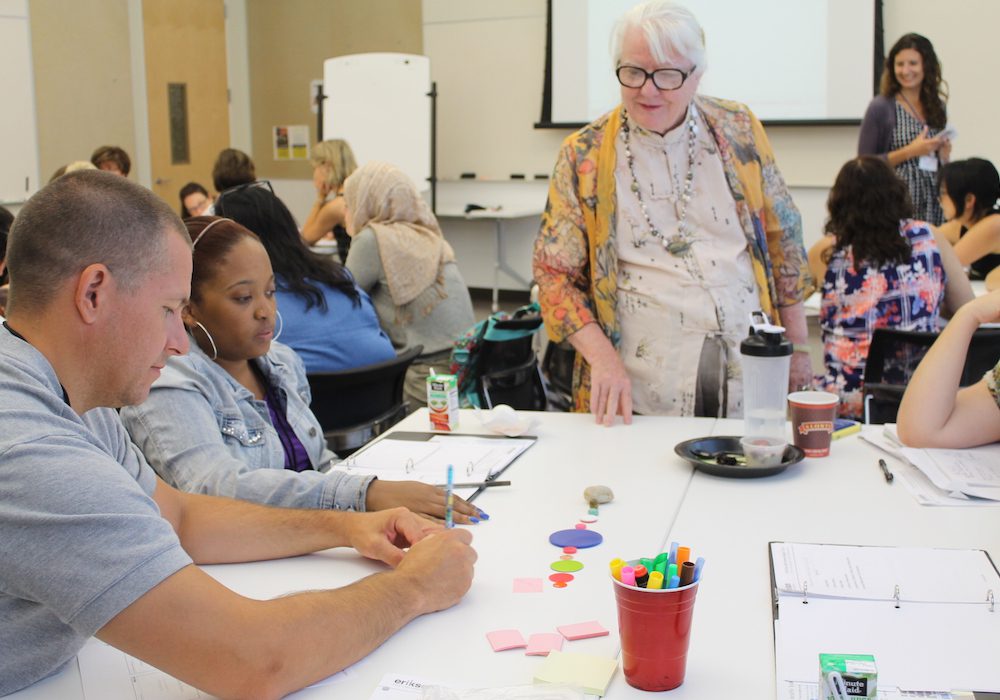
Learning labs are interactive full- or part-day sessions in which early childhood teachers, coaches, or administrators gain understanding of the math content and math teaching strategies to improve core competencies based on state and federal standards.
We believe that you have to understand what you are teaching to teach for understanding
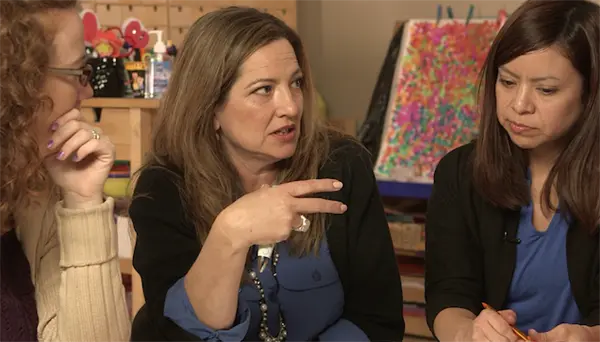
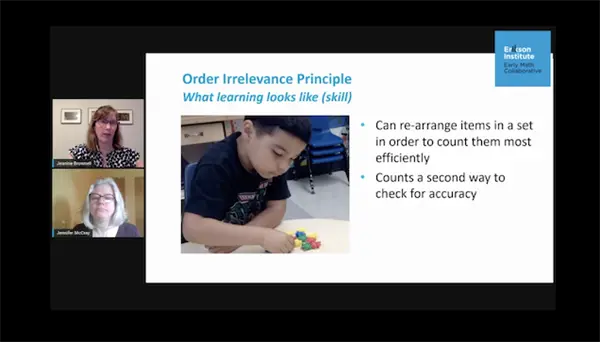
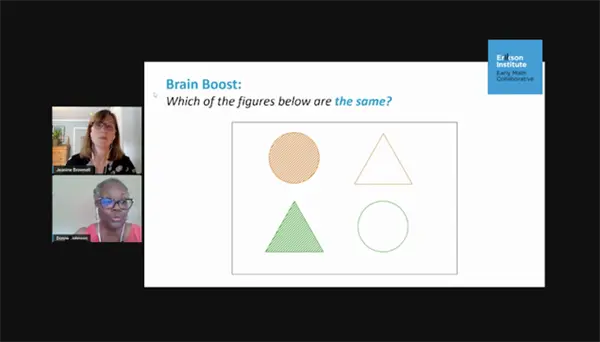
Learning labs aim to simultaneously deepen mathematical knowledge, change attitudes, and develop effective instructional practices. To do so, we engage adults in worthwhile math tasks and ask them to reflect on their experience as learners. Then we explore what children’s learning looks by examining video examples and learning progressions. Instructional strategies are highlighted throughout.
Big ideas of foundational math
We created the Big Ideas in Early Mathematics to address the need for a deeper understanding of foundational concepts in math and how they can be included in appropriate early childhood practice. Our Big Ideas use clear language to identify the central concepts within each mathematical topic—such as sets or number sense. Early childhood teachers can use these Big Ideas as a guide for thinking about the kinds of math learning opportunities they need to provide in their classrooms.

Content-focused whole teacher approach
The Whole Teacher Approach is a conceptual framework for the design of professional development designed by Dr. Jie-Qi Chen, the founder of the Early Math Collaborative. While addressing teacher knowledge, attitudes, and practice in an integrated fashion, multiple pathways to teacher development are activated and training is more successful and has longer-lasting effects. This philosophy is used to guide our program design, implementation, and evaluation.
Audiences
We aim for change from the ground up. That means the most ideal professional development involves a community of learners: teachers, teacher leaders, and administrators.

Teachers
This includes direct intervention with teachers by Early Math Collaborative instructors in the form of Learning Labs and Instructional Coaching.

Leaders
Many interventions aim for a “train-the-trainers” model, in which we work with coaches, facilitators, or pre-service education professionals so that they can train their teachers and students.

Administrators
Leadership Academies help school administrators learn about Erikson’s approach to professional development, enhance their math knowledge and understanding, provide them with tools for classroom observation and conversations with teachers about instruction, and keep them informed about their teachers’ learning so they can support its implementation at their school.
Explore our Adult Learning Series
Discover free resources targeted for adult learning in early mathematics education.
Big Ideas of Early Mathematics
What Teachers of Young Children Need to Know
The Big Ideas that convey the core concepts of mathematics are at the heart of this book that gives early childhood educators the skills they need to organize for mathematics teaching and learning during the early years.
MS in Early Childhood Ed
Elevate your practice and strengthen your knowledge of teaching and learning in the disciplines of science, technology, engineering, and mathematics (STEM), with an emphasis on children in preschool through third grade.

Join the Collaborative
Together, We Can Change the Way Math Is Taught
Join a hub of educators, administrators, and professionals reframing the way we think about and teach math.