Family and Community Math
Family math is a current “buzz word” among early math educators. Different organizations define it differently, but it generally refers to math-related activities that happen outside the classroom and within the context of family relationships and everyday life. Given findings that early math achievement at preschool entry is predictive of later school success, and that there is an opportunity gap for children from under-resourced communities, we need to know more about how to activate and celebrate math learning in diverse racial, ethnic, cultural and socio-economic family and community contexts.
Early math learning in family and community contexts
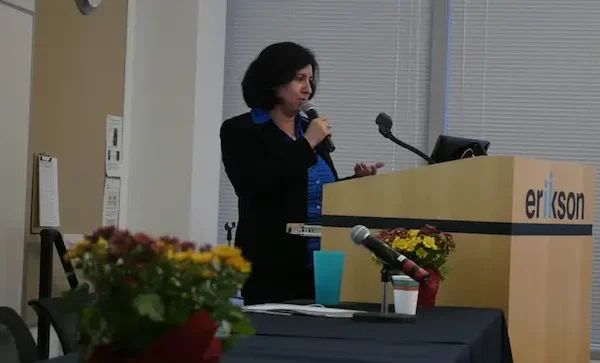
Promising Math 2019 provided opportunities to address these concerns through the sharing and building of knowledge, and the development of new partnerships and networks of concerned stakeholders. Operating from the position that mathematics is both vitally important and an opportunity for joyful learning and relationships, our convening highlighted recent research on contexts where early math learning takes place before and outside of school. The goal was to connect diverse participants from varying backgrounds and offer examples of new frameworks for understanding culturally- and linguistically-diverse family interactions around mathematics.
Promising Math 2019 took place November 15th and 16th at Erikson Institute.
Explore Highlights from Promising Math

Explore Our Family Math Resources

2017 Major Questions
Cognitive
- What is the nature of the mathematics children are learning/should learn before kindergarten? Before preschool?
- How do language and thinking interact prior to preschool (between birth and three years) to contribute to math learning?
- What are intrinsic/instinctive forms of understanding that infants bring to help them develop their very early understanding of space, quantity, and size?
Contextual
- What do we know about the role of families and caregivers in the development of the earliest mathematical thinking?
- What do family interactions around mathematics look like, particularly in more racially, ethnically, socio-economically, and culturally diverse communities?
- What is current thinking around measuring family interactions related to early math? What are the measurement challenges?
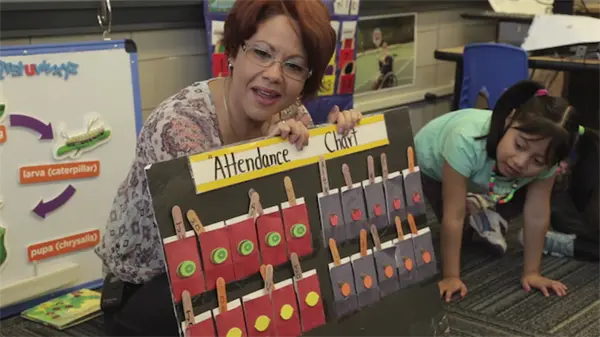
- What kinds of inputs, such as toys, environments (parks, libraries, museums), apps (and technology in general), and play experiences, help to develop early math thinking?
Collaborative
- How can we develop more strength-based approaches to help us tap funds of knowledge and competence among commonly marginalized families?
- How can home visitors, teachers, and other professionals who work with families with young children help them provide rich and positive early math-related experiences for young children? How should we support these professionals?
- What are promising and innovative ways to support busy parents and parents who don’t have easy access to museums and libraries?
- To what extent do standards and policies reflect the best thinking about how to mobilize families and caregivers to enhance math learning?
2019 Plenary Speakers

Omo Moses
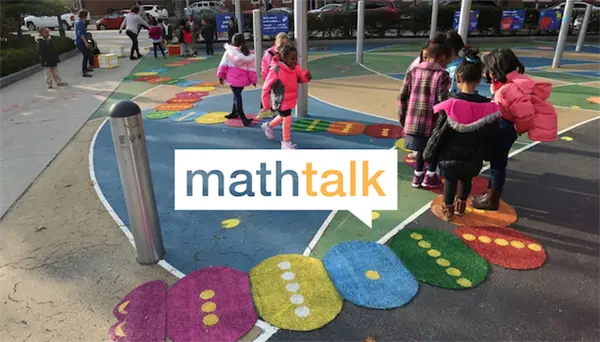
Omo Moses is the Executive Director and founding member of the Young People’s Project (YPP) and the founder of MathTalk, a community-based educational technology lab located in Boston focusing on the research and design of early math products and services for parents, caregivers, teachers and children. MathTalk strives to inspire and equip adults with tools that prompt high quality early math experiences and conversations with children.

Keith Griffin
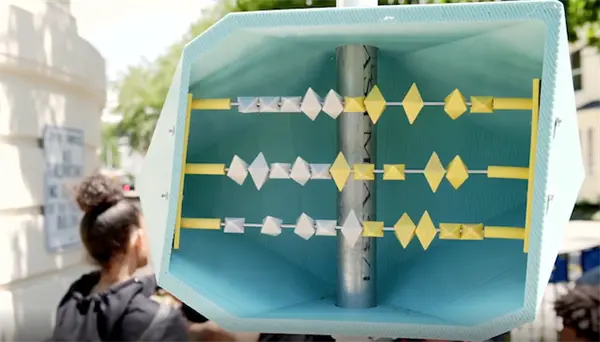
Born and raised in Cambridge, Keith Griffin has been involved with youth physical education for the past 27 years. He coached multiple youth sports leagues for ages 4 through 12. Keith serves on the Cambridge Family Council policies board to help build equity in health and educational opportunities across the city. In 2018, Keith joined MathTalk where he applies his carpentry skills to help create and develop math installations in public spaces throughout the community where he currently lives and raises his 6 children.

Kelly Mix, Ph.D.
Kelly Mix, Ph.D. is the Chair of the Human Development and Quantitative Methodologies (HDQM) department at the University of Maryland. A former elementary school teacher, Dr. Mix transitioned to academia to better understand how different teaching processes work, as well as why some students struggle to learn concepts that come easily to others. Her research focuses on the development of mathematical cognition and number and spatial concepts in young children.

David Purpura, Ph.D.
David Purpura, Ph.D. is associate professor in the Department of Human Development and Family Studies at Purdue University. His current focus is on evaluating the effects of literacy and executive functioning skills on the development of young children’s mathematical knowledge as well as on evaluating interventions and instructional methods that enhance this development. He also studies the home numeracy and literacy environment and how home factors affect children’s academic skills at preschool entry.
2019 Advisory Board
- Tonya Bibbs, Erikson Institute
- Kimberly Brenneman, Heising-Simons Foundation
- Eric Dearing, Boston College
- Rebeca Itzkowich, Erikson Institute
- Kelly James, Education First
- Danny Martin, University of Illinois at Chicago
- Jennifer McCray, Erikson Institute
- Kristen Reed, Education Development Center
- Pamela Williams, THRIVE Washington
Sponsors
The conference is generously funded by a grant from the Heising-Simons Foundation.

Big Ideas of Early Mathematics
What Teachers of Young Children Need to Know
The Big Ideas that convey the core concepts of mathematics are at the heart of this book that gives early childhood educators the skills they need to organize for mathematics teaching and learning during the early years.
A Library of Ideas
Browse hundreds of articles, videos, modules, and discussions in our Idea Library we have collected, categorized, and curated the best resources for early math thinking and teaching.

Join the Collaborative
Together, We Can Change the Way Math Is Taught
Join a hub of educators, administrators, and professionals reframing the way we think about and teach math.