Faculty Q&A: Co-Authors of “What Teachers Need” on Reframing Teacher Well-Being
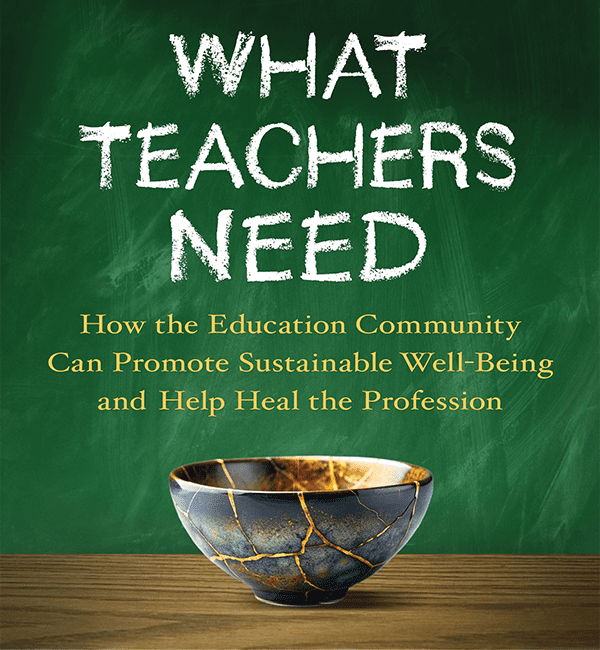
Q: How would you describe What Teachers Need, and why did this book feel important to write right now?
Amanda Moreno: The title is very intentional. It’s What Teachers Need, not What Teachers Need to Do. The teaching profession is in crisis—there’s burnout, turnover, and a lot of stress—and there’s real healing that needs to happen. We wanted to move away from the idea that teachers just need to fix themselves and toward the people and systems responsible for creating their working conditions.
Jeanette Banashak: This book really came out of conversations with educators. We kept hearing teachers blame themselves, minimize their feelings, or gaslight themselves into thinking, “If I were just better at self-care, this would be okay.” What became clear is that responsibility needs to move up a level —to principals, district leaders, and systems of accountability.
Q: The book reframes teacher well-being as a shared responsibility. What inspired that shift in perspective?
Banashak: Honestly, it came from listening. Teachers were talking about change only in terms of what they could do inside their own classrooms, even when the barriers were structural. That’s when we began asking: What could accountability look like at every level? How are principals supported by superintendents? How are systems supporting—or failing—the people within them?
Moreno: My own policy work around teacher evaluation made this very clear. Teachers were being held responsible for things largely outside their control—students’ economic circumstances, neighborhood conditions, family stressors. I also have a sister who has been a 5th grade public school teacher for many years, so I have a direct line into exactly what’s happening on the front lines, all the ways that demands on teachers are increasing and they are upping their game, but still being blamed for student struggles.
Q: What are some common misconceptions about teacher wellness that you hope the book challenges?
Moreno: One major myth is that teachers can breathe their way out of moral injury. Mindfulness and self-care are fine, but they cannot fix systemic harm. At the same time, the opposite myth—that nothing can change until the entire system is reformed—is also untrue. We wanted to live in that middle space of meaningful action that can happen now.
Banashak: Another misconception is that teachers have to do this alone. Wellness is often framed as an individual task, but heavy workloads, lack of institutional support, and policy decisions all contribute to burnout. In our experience, teachers have expressed that being in community with one another – when those spaces are curated with their humanity at the center – is healing and allows them to continue in their work. We wanted to feature the multiple ways that thought leaders are curating such spaces across the country and the world.
Q: What do school leaders often underestimate when it comes to supporting teachers?
Moreno: A scarcity mindset comes up again and again. Leaders often feel boxed in by time, money, and pressure from above. But we also heard powerful examples of leaders recognizing the resources already present—teachers, families, community members—and finding creative ways to build cultures of belonging and care. The chapter from a former Chicago Public Schools principal is absolutely chock full of ideas for leaders to create wellness from only existing resources.
Banashak: When we understand social and emotional learning as a way of being—not just a program—it becomes something embedded in policies, relationships, and everyday practice, rather than an “extra.”
Q: What do you hope different audiences take away from the book?
Moreno: For leaders and facilitators, it’s important to understand that teachers’ skepticism is earned. Teachers see through platitudes like “remember your why.” Real support means reducing burdens, making time, and ensuring teachers’ voices guide professional learning.
Banashak: For teachers, we hope the book offers both validation and possibility. Even if what’s described in the book isn’t happening in their school yet, it helps to know how things could be—and how they deserve to be treated. There are also plentiful ideas for how to create change starting small, through relationships and coalitions, and grow from there.
Q: Ultimately, what do you hope What Teachers Need contributes to the field of education?
Banashak: I hope it helps educators stop internalizing blame and instead see themselves as part of a larger ecosystem that must be accountable to them.
Moreno: And I hope it offers both honesty and hope—acknowledging the real harm teachers experience while also providing practical, collective ways to begin repairing systems now.
For readers who connect with the ideas at the heart of What Teachers Need, Erikson’s Graduate Certificate in Social and Emotional Learning (SEL) offers a natural next step. At Erikson, students don’t just learn about SEL—they experience it through relational learning, reflective practice, and close engagement with faculty. If you’re passionate about strengthening your own practice and the conditions that support children, families, and educators, the SEL certificate invites you into a community where these values are lived, studied, and advanced together.
Learn more about Erikson’s Graduate Certificate in Social and Emotional Learning
Join the Erikson family with monthly news + events updates shared by academics, community members, and families.



Create a Better Future For Children While Building Yours
Embark on your early childhood graduate program path at Erikson Institute and start changing lives.