Honoring Multilingual, Multimodal Communication: Lilly Padia on Teaching Beyond Spoken Words
Q: Tell us about your book—what’s the title, and what is it about?
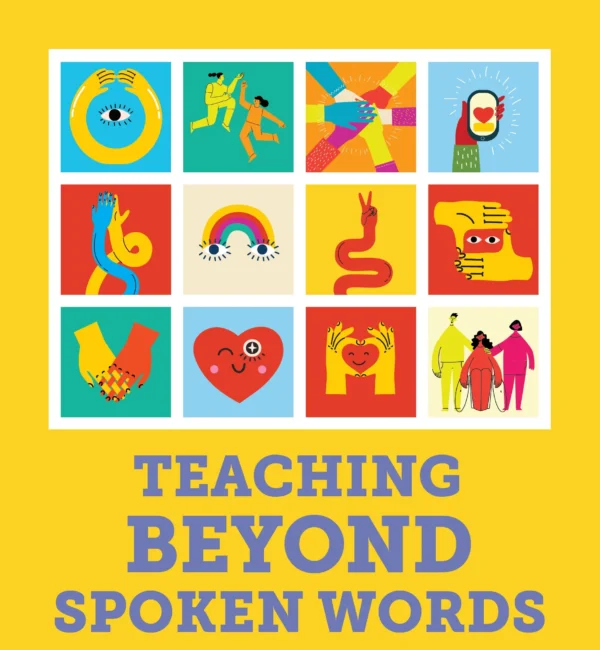
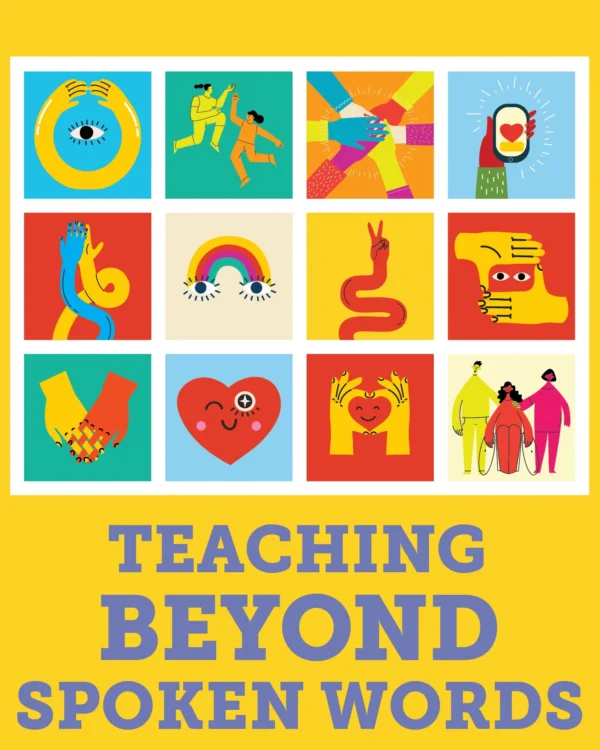
A: My book is Teaching Beyond Spoken Words: Communicating with Non-Speaking, Bilingual Children in the Classroom. It’s based on my experience as a classroom teacher and on my research with non-speaking bilingual children and their families.
Q: What inspired you to write this book?
A: As a teacher in the Bronx, I taught a kindergarten special education class where several children were considered nonverbal, and many came from homes where English wasn’t the primary language. I realized quickly that my training didn’t prepare me for the intersection of non-speaking communication and multilingualism. Professional development tended to separate special education from bilingual education. I wrote this book to help create the tools and perspectives I wish I’d had—and that teachers still need.
Q: How do you define “communication,” and how might teachers need to expand that definition?
A: Communication isn’t just spoken words or traditional writing. It includes a full range of modalities—gesture, movement, body language, sound, technology, and more. Children who don’t use vocal speech may still use language through devices, typing, reading, and other ways of meaning-making. Teachers often need to expand what they recognize as communication.
Q: You use the term “communicative justice.” What does that mean?
A: Communicative justice is about creating classrooms where multilingualism and multimodal communication are honored—where children can use all the tools they have to make meaning. It also means turning the lens on ourselves as educators: if we think a child “isn’t communicating,” we should ask what we have not yet learned to perceive.
Q: You developed the “reciprocal carryover” model. Can you explain it?
A: In schools we often talk about families “carrying over” strategies from school to home. Reciprocal carryover is the idea that this has to be bi-directional. Educators should also learn from families’ communication systems and carry those strategies into the classroom—especially for non-speaking bilingual children. In the book, I offer guiding questions for families and practices like video communication logs to support that exchange.
Q: If readers take away only one message from Teaching Beyond Spoken Words, what would you want it to be?
A: Differentiation for students with disabilities and/or multilingual learners should not be an afterthought. If we design learning environments with non-speaking bilingual children in mind from the beginning, we create richer opportunities for expression and engagement for everyone.
Padía’s message reflects the heart of Erikson’s MS in Early Childhood Education Triple Endorsement program: preparing teachers to see children as capable co-learners, to challenge narrow definitions of “normal,” and to build classrooms that support multilingual, inclusive learning from day one. If you’re inspired by the call to teach beyond one-size-fits-all approaches—and to create educational spaces where every child’s strengths, language practices, and communication are recognized—Erikson’s Triple Endorsement program offers the preparation to do exactly that.
Join the Erikson family with monthly news + events updates shared by academics, community members, and families.
Create a Better Future For Children While Building Yours
Embark on your early childhood graduate program path at Erikson Institute and start changing lives.