Big Ideas of Spatial Relationships
Learn the big ideas of spatial relationships and explore related activities, books, and resources.
Understanding Spatial Relationships
Understanding spatial relationships and developing spatial reasoning begins at birth. Infants are learning to reach for and then grasp objects that are dangled in front of them, tossed to the side, or that have fallen down from a chair. Toddlers are crawling, cruising, or walking to reach a toy. By the time they are preschoolers, not only can children easily locate items or decide how best to get from here to there; they also have begun to represent space.
The key concepts embedded in activities that make them mathematical are their relational nature. Later on in mathematics, children will learn to apply numbers to such activities, measuring distances and angles, and learning the meaning of “parallel” and “equilateral,” but for now, their efforts will be focused on less precise ways to represent relationships between objects and places.
Copyright: Erikson Institute’s Early Math Collaborative. Reprinted from Big Ideas of Early Mathematics: What Teachers of Young Children Need to Know (2014), Pearson Education.

Spatial relationships can be visualized and manipulated mentally
Learning how to hold a spatial representation in the “mind’s eye” can be challenging for young learners. They build proficiency in this skill when teachers provide concrete and pictorial experiences with spatial transformations, such as cutting an item in half, flipping it upside down, or rotating it to make it “fit.”
Our own experiences of space and two-dimensional representations of space reflect a specific point of view
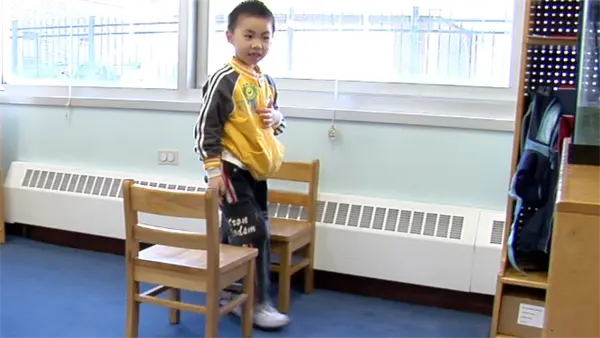
Practice in the classroom will cultivate an awareness of perspective: the understanding that spatial relationships look different when viewed from different positions. It will take time before they understand that when they are face-to-face with their friend, something on their left appears to their friend on her right, but early experiences can prepare them for this type of sophisticated thinking.
Relationships between objects and places can be represented with mathematical precision
A simple reminding remark such as “Where do we keep the paintbrushes?” is an opportunity for children to describe their understanding of space. If the response is a gesture or a phrase such as “over here,” you can take advantage by saying, “that’s right, we keep them in the coffee can on the shelf by the window,” modeling a much more precise response. If your spatial language is rich and precise, over time, children’s language will become more specific, as will their understanding.
Explore Books & Resources Related to Spatial Relationships
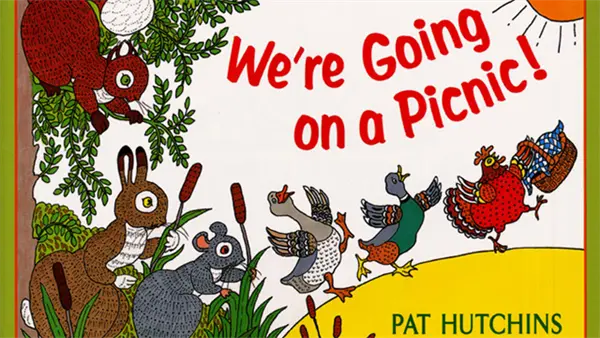
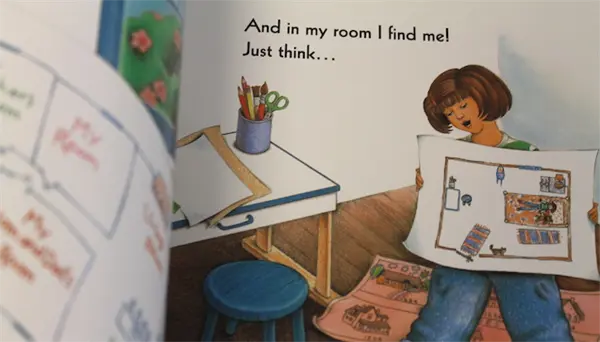
Children in a math-rich early childhood environment will have many experiences working with spatial relationships, including having books to read that invite spatial reasoning. Early experiences talking about, organizing, moving through, drawing, and modeling space provide a critical conceptual base for the mathematical study that will turn them into engineers, architects, scientists, taxi cab drivers and other adults who competently make their way from here to there. When deciding on math picture books, choosing those that encourage children to develop spatial thinking can become a healthy exploration.


Big Ideas of Early Mathematics
What Teachers of Young Children Need to Know
The Big Ideas that convey the core concepts of mathematics are at the heart of this book that gives early childhood educators the skills they need to organize for mathematics teaching and learning during the early years.

Join the Collaborative
Together, We Can Change the Way Math Is Taught
Join a hub of educators, administrators, and professionals reframing the way we think about and teach math.