
Big Ideas of Patterns
Learn the big ideas of patterns and explore activities, books, and resources related to patterns in early mathematics.
Understanding Patterns
From the earliest age, young children innately look for patterns in their world. Bedtime comes after bath and a book every night. There are five school days, followed by two home days each week. The human brain is predisposed to pattern, to find similarities that bind seemingly unrelated information together in a whole. While the search for pattern underlies all of learning, it makes a particularly powerful contribution to our mathematical understanding. Virtually all mathematics is based on pattern and structure. By pattern, we mean any predictable sequence found in physical and geometric situations as well as in numbers.
Copyright: Erikson Institute’s Early Math Collaborative. Reprinted from Big Ideas of Early Mathematics: What Teachers of Young Children Need to Know (2014), Pearson Education.

The same pattern structure can be found in many different forms
Children must see all mathematics as a search for patterns, structure, and relationships, as a process of making sense of physical, geometric, and eventually numerical, situations. This understanding develops over time and enables children to see connections and think about relationships apart from their physical form.
Identifying the rule of a pattern brings predictability and allows one to make generalizations
One way to think more precisely about how a pattern works is to identify its rule. This helps children begin to extend their thinking from one situation to another.
Patterns are sequences (repeating or growing) governed by a rule; they exist both in the world and in mathematics
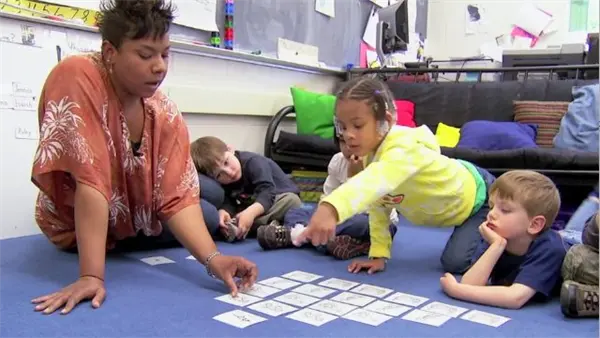
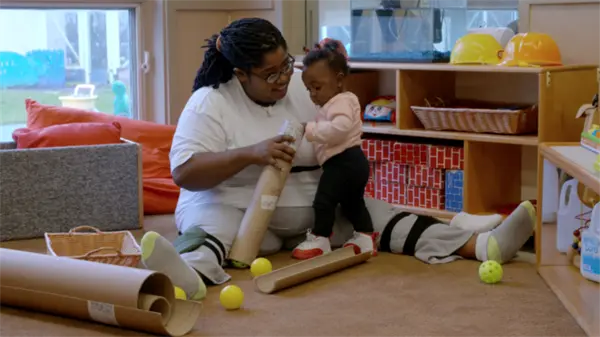
With experience, young children get “tuned in” to patterns and deepen their understanding of them both in the classroom and in the world. Teachers can build on children’s natural tendency to find patterns everywhere in order to make children’s knowledge more precise and mathematical.
Explore Books & Resources Related to Patterns
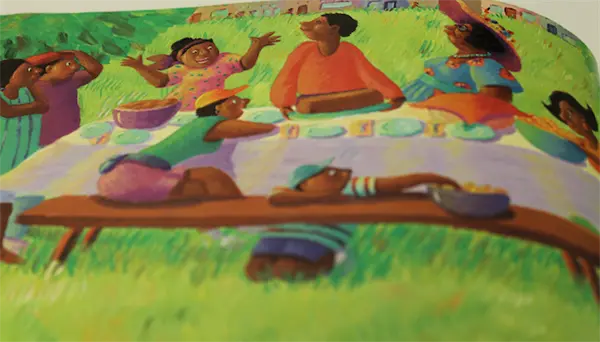
Mathematics “makes sense” because patterns allow us to generalize our understanding from one situation to another. Children need many opportunities to discover and talk about patterns in the world. Books are a natural entry point. These experiences help them form the attitude and confidence that mathematics should make sense––the crucial foundation all children need to become persistent and flexible problem solvers.



Big Ideas of Early Mathematics
What Teachers of Young Children Need to Know
The Big Ideas that convey the core concepts of mathematics are at the heart of this book that gives early childhood educators the skills they need to organize for mathematics teaching and learning during the early years.

Join the Collaborative
Together, We Can Change the Way Math Is Taught
Join a hub of educators, administrators, and professionals reframing the way we think about and teach math.