
Big Ideas of Operations
Number operations are the tools we use to find the answers to questions like these and to compare numbers of objects when a story is present in everyday life. Learn the big ideas of operations and explore related activities, books, and resources.
Understanding Operations
Just as number sense develops when children are clear that something is being counted, the ability to make sense of number operations depends on the foundational understanding that every operation tells a story. Time and again, everyday life brings up compelling questions about How many now? How many more or fewer? and Is it fair? Number operations are the tools we use to find the answers to questions like these and to compare numbers of objects when a story is present in everyday life. Ways of mentally modeling real situations in order to answer these questions are what we mean by number operations.
It is crucial that we give children multiple ways to make sense of a problem situation such as How many now? — by acting it out, making drawings, or using manipulatives. Rote mastery of all the ways to add and subtract 1–10 isn’t much use when what children need to do is to identify what the unknown is in a problem situation, and have some plan for how to figure it out based on the relationships between the numbers that are given. Having a story to think about helps children visualize the problem situation.
Copyright: Erikson Institute’s Early Math Collaborative. Reprinted from Big Ideas of Early Mathematics: What Teachers of Young Children Need to Know (2014), Pearson Education.

A quantity (whole) can be decomposed into equal or unequal parts; the parts can be composed to form the whole
An understanding of the parts-whole relationship within a set is a necessary foundation for operating on and with numbers. Children need to recognize that smaller numbers are contained within larger numbers and be able to describe the parts of numbers. When they can do so, they are building strategies that will later allow them to address a complex problem situation such as, “Junie has 5 pencils. Three of them were given to her by Marcos this morning. How many did she have before?”. That is, they need to be very comfortable with the idea that the quantity of 5 is not just a collection of ones, but can be thought of instead as a group of 3 and a group of 2.
Sets can be compared using the attribute of numerosity, and ordered by more than, less than, and equal to
Some situations require comparing sets to answer the questions “how many more?” or “how many fewer?”. Cultivating an understanding of comparison and ordering helps children build the understanding they need to think about a set in relationship to other sets and begin to make comparisons between numbers. Familiarity with this idea prepares children to address questions they will encounter in first and second grade, such as “If Ilan has ten crackers and Juanita has 8, how many more does Ilan have?
Sets can be changed by adding items (joining) or by taking some away (separating)
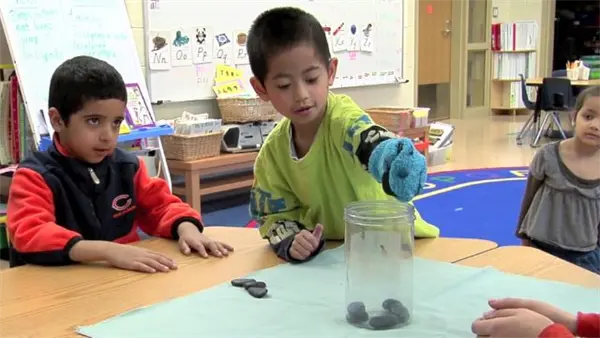
Many problem situations involve change—adding to or taking away from a set. Such changes lend themselves to concrete models or to acting out as sets are joined or separated and then counted to find out “how many now?”. However, it is also important for young children to make the more foundational generalization that adding increases and taking away decreases the quantity in a set.
Explore Books & Resources Related to Operations
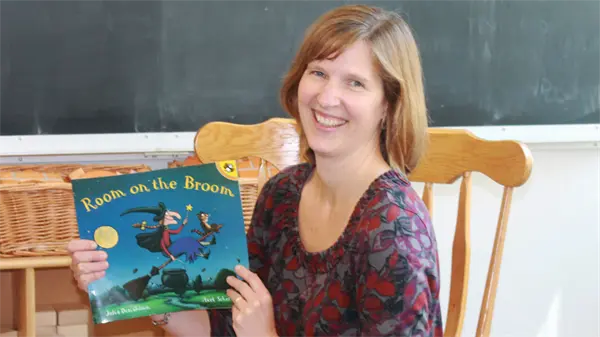
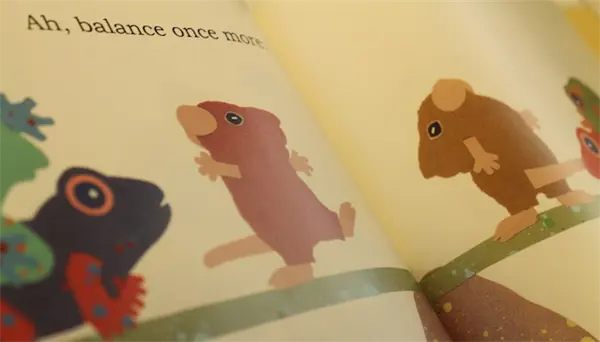
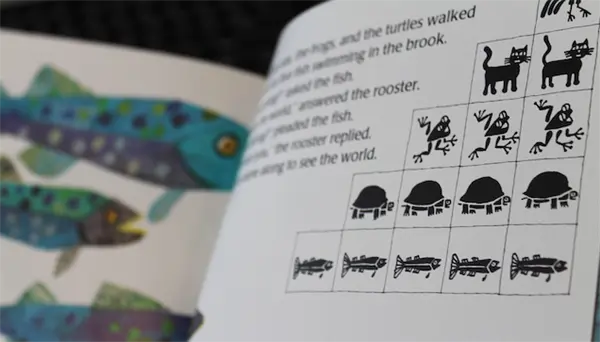
In a math-rich early childhood classroom, children will have many opportunities to work with math stories and operations. This includes having children’s picture books that explore these different math stories. Before we ever introduce symbols to pull the mathematics out of the context, children need many experiences seeing that three friends and three more friends is six friends, or that three pencils and 3 markers make 6 things for writing. Picture books can be a great starting point for these explorations.



Big Ideas of Early Mathematics
What Teachers of Young Children Need to Know
The Big Ideas that convey the core concepts of mathematics are at the heart of this book that gives early childhood educators the skills they need to organize for mathematics teaching and learning during the early years.

Join the Collaborative
Together, We Can Change the Way Math Is Taught
Join a hub of educators, administrators, and professionals reframing the way we think about and teach math.